

For Candice Vande Wetering, a career in hearing care was not always the plan.
Originally, she imagined herself becoming a teacher. However, after spending some time exploring that path, she quickly realised that teaching children was not going to be her calling.
The right career was waiting somewhere else, and as it turned out, it was much closer to home.
Discovering Hearing Care
Candice’s parents returned to school in their 40s to begin careers in hearing healthcare. She watched as they trained, worked in clinics and eventually opened a clinic of their own.
It gave Candice an early look behind the scenes of the profession, although she did not initially expect to follow in their footsteps.
Her first real experience came while working at the front desk of a hearing clinic. It was there that she discovered how much she enjoyed speaking with clients, learning about their lives and helping them navigate their care.
“I ended up really enjoying all the chatting and helping that I got to do, even just at the front desk,” she explains.
At the time, Candice was working as a restaurant manager. Having already completed an undergraduate degree, she enrolled in a part-time hearing healthcare program and completed two years of technical training.
Soon afterwards, she stepped into a busy hearing clinic and never looked back.
Experience Across Every Type of Clinic
Throughout her career, Candice has worked in several very different hearing care environments.
She has experienced large corporate clinics, small family-run businesses and independent practices. Each setting has given her a valuable perspective on how clinics operate and, more importantly, how different approaches can affect the experience of the person sitting on the other side of the desk.
“I’ve seen different clinics and different ways of managing and working,” she says. “I think it gives me some pretty good insight into how to help people.”
That range of experience has also helped Candice understand what matters most to her as a hearing care professional.
For Candice, great hearing care is not simply about completing a test or recommending a device. It is about having the freedom and time to properly understand each person, build a relationship and provide care in a way that feels personal.
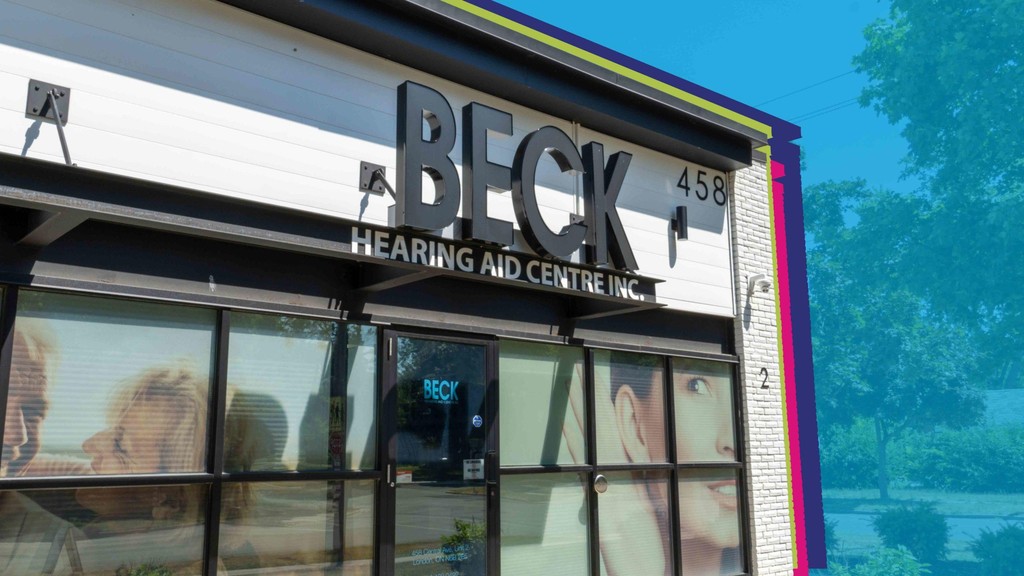
That is one of the reasons she chose to return to an independent clinic environment with Beck Hearing.
Returning to Relationship-Led Hearing Care
Candice believes that one of the most important parts of hearing care is creating a space where people feel comfortable.
Hearing loss can be personal. For some people, even booking a hearing test can feel intimidating. They may be worried about what the test will reveal, concerned that they will be pressured into making a decision or simply unsure about what to expect.
Candice’s goal is to make the process feel less daunting.
“Being in a private clinic allows me to connect with people how I want to connect,” she explains. “It gives me the relationship back and the time to spend with people, which I think is the most important part of the job.”
Rather than rushing through appointments, she wants her clients to feel heard, understood and confident asking questions.
That may mean spending time discussing the situations in which someone is struggling, exploring how hearing changes are affecting their relationships or simply giving them time to process the results of their hearing evaluation.
The technology matters, but Candice believes the relationship surrounding that technology is just as important.
Why Candice Chose Beck Hearing Aid Centre
For Candice, Beck Hearing offers a combination of clinical knowledge, personal understanding and genuine passion for hearing care.
With multiple locations and a team that brings experience from across the hearing healthcare profession, Beck is able to provide comprehensive local care while maintaining the personal feel of an independent clinic.
Candice also values the insight of Beck’s ownership team, which includes both hearing healthcare expertise and personal experience of wearing hearing aids.
That combination helps create a deeper understanding of what clients may be experiencing, not only clinically, but in their everyday lives.
“There’s a passion and there’s knowledge,” says Candice. “Working for people who are passionate about what they do is important to me.”
She believes that passion can be seen throughout the client experience, from the attention to detail and the time spent understanding each person, to the comprehensive testing used to build a complete picture of their hearing.
Building Success Through Better Understanding
At Beck Hearing, hearing evaluations are designed to go beyond a quick screening.
Depending on the individual, testing may include assessments such as speech-in-noise testing and acoustic reflex measurements, alongside the wider diagnostic test battery.
The purpose is not to perform additional testing simply for the sake of it. It is to understand how someone hears in the real world and identify the factors that may be contributing to their difficulties.
“At the heart of it, understanding and getting a really good base is how you build on success,” Candice explains.
A detailed starting point allows the team to make more informed recommendations, whether that involves hearing technology, communication strategies, counselling or other forms of hearing rehabilitation.
It also provides something valuable even when no immediate treatment is needed: a baseline.
Why a Baseline Hearing Test Matters
Candice strongly encourages people not to wait until hearing difficulties become severe before scheduling an assessment.
Hearing loss often develops gradually. Because the changes can happen slowly, many people adapt without realising how much they are missing.
Family members may begin to notice first. The television may gradually become louder. Conversations in restaurants may become more tiring. Certain voices may seem less clear, or people may appear to mumble more than they used to.
A baseline hearing test creates a record of where your hearing is today. This allows any future changes to be identified and monitored more accurately.
Candice suggests that having a baseline test around the age of 55 can be particularly valuable, even when there are no obvious concerns.
“Most of my clients who are seeing me regularly wish they had come in earlier,” she says. “They wish they had some sort of red flag so they knew it was coming.”
Knowing what your hearing looks like can remove some of the fear and uncertainty. It also means that should changes occur later, you already have a trusted professional and a clear point of comparison.
More Than Hearing Aids
One of the biggest misconceptions about booking a hearing test is the belief that it will automatically lead to hearing aids.
Candice is quick to explain that this is not the case.
The first goal is simply to understand what is happening.
For some people, the test may confirm that their hearing is within a normal range. For others, it may identify a change that should be monitored. Where hearing loss is present, there are often several ways to provide support.
Hearing aids can play an important role, but they are only one part of hearing care.
Communication counselling, listening strategies, hearing rehabilitation and ongoing professional support can all help someone communicate more confidently and stay connected to the people around them.
The right recommendation depends entirely on the individual.
Helping People Feel Comfortable Taking the First Step
Candice understands that walking through the clinic door can sometimes feel like the hardest part.
Her message to anyone who is hesitant is simple: the appointment is about giving you clarity.
“Our goal is to have you walk out understanding what your hearing looks like,” she says.
There is no pressure and no assumption about what the result will be. Instead, Candice and the wider Beck team are there to answer questions, explain the findings clearly and help each person decide what, if anything, should happen next.
For Candice, that combination of clinical care and personal connection is what makes the work so rewarding.
It is also why, after experiencing so many different sides of the hearing care profession, she has chosen to build the next chapter of her career at Beck Hearing.
Because better hearing care does not begin with a hearing aid.
It begins with listening.
Search